Skip to content
REDATS – How to choose tyre service and car repair tools
  • Go to website: REDATS.COM

REDATS – How to choose tyre service and car repair tools

How to choose a piston compressor?

11 June 2026 by Tomasz Szymański

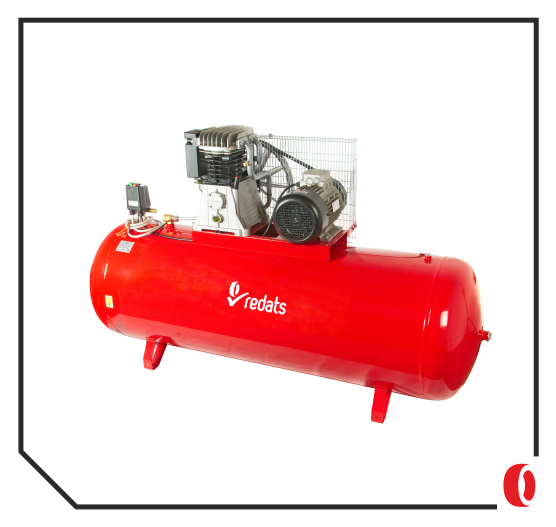
People often ask us, “Which compressor brand do you recommend?” In our opinion, what matters more than the badge on the housing are the actual parameters of the unit. Which ones are worth paying attention to? We cover that in this article.

First of all – why do you need a compressor in your car service? Without it, equipment such as the following would not work:

  • impact wrenches
  • pneumatic vacuum cleaners
  • air ratchets
  • grinders and polishers
  • riveters
  • spray guns
  • sandblasting guns
  • pneumatic lifts (air jacks)

A piston compressor is essential both in tyre services and in mechanical car services. But with so many options on the market, making the right choice is not always easy. A low price matters, but… it is not the most important thing. Find out what to look at when choosing a piston compressor.
__________________________

COMPRESSOR FOR A CAR SERVICE – HOW DO YOU CHOOSE ONE?

See what to pay attention to when buying a piston compressor for your business:

  • power
  • air delivery
  • noise level
  • tank capacity

Knowing these parameters will help you decide whether a given unit will really meet your needs.

__________________________

WHAT COMPRESSOR FOR A TYRE SERVICE – POWER

For typical tyre service work, it is worth choosing a compressor with at least 2 HP. But if you want the best working comfort, it is worth going for a compressor with 4 HP or more.

Are compressors with more power better than those with less? Well, power is important – there is no doubt about that. But the performance of the unit is just as important. This parameter shows how much compressed air the machine is able to deliver at a given moment.
_______________________________

AIR COMPRESSOR – AIR DELIVERY

This parameter describes the actual performance of the unit. It shows how much air the compressor produces per minute and delivers to the tools it powers. In other words, air delivery will help you decide whether a 50 L compressor is enough for an impact wrench.

How do you choose a compressor with the right air delivery? Think about how much air the different pneumatic tools in your car service or tyre service need.

To make it easier, we have prepared a table:

For work typically related to tyre service (seasonal tyre changes in a tyre service), compressors with an air delivery of at least 300 l/min should be enough. They will power many impact wrenches and grinders.

IMPORTANT!

Avoid choosing a compressor with no margin! It is better to leave yourself a reasonable performance reserve, so you do not suddenly find that the machine you are using for wheel work has run out of power.

Air delivery Air demandIs it enough? 
150l/min140 l/min YES
150l/min150 l/min NO
300l/min360 l/minNO

AIR COMPRESSOR – NOISE LEVEL

Remember to check this parameter. It affects your working comfort, and piston compressors are definitely not among the quietest machines. Many cheaper units operate at levels above 80 dB, which can be really hard on your ears. Still, there are compressors whose operation does not have to be quite so troublesome. For example, some REDATS units are fitted with special pumps that reduce noise and allow quieter operation.

THE COMPRESSOR IS TOO LOUD? MOVE IT!

There is no point pretending otherwise – piston compressors are loud. For example, if you place the compressor next to the tyre changer and both machines are working at the same time (and the compressor starts building pressure as well), it simply gets loud. At that point, even having a normal conversation with a customer can become a problem.

One solution may be to move the compressor to another room and run the air lines, for example, underground. You can also place the compressor somewhere outside. The only important thing is that the temperature there must be suitable. For example, you can put the compressor in some kind of enclosure – it just needs a bit of insulation so that on colder days it does not get too cold inside and the compressor can keep working properly all the time.

TANK CAPACITY

What does it mean? Remember that a small tank capacity means frequent breaks in work. The more air the compressor can store, the less often it needs to refill. This is especially important in paintwork, where a constant air supply is essential. If you often do small paint jobs, we recommend compressors with a capacity of at least 300 litres.

And what if you do not paint cars, but only handle basic mechanical work or tyre service? In that case, compressors with a 200-270 litre tank are more than enough to power impact wrenches.

Also pay attention to the air intake capacity. This parameter shows how quickly the tank fills up. So it mainly matters for the speed and convenience of your work.

CLEAN AIR – DO NOT FORGET ABOUT IT!

During the operation of an oil-lubricated compressor, so-called condensate is produced – a mixture of air and oil. It is worth remembering that the air should be cleaned of this kind of contamination. This is what air treatment units are for. How do they work? You can read about that here.

Preparing a piston compressor for work is a very simple procedure. Keep this in mind before the next season. It only takes a few basic steps to make sure you have a fully efficient compressor that will not let you down even during very intensive seasonal work. Here are a few steps worth remembering.

DO NOT SKIP THE OIL!

Before the season starts, make sure you change the oil. The job of the lubricant is not only to reduce friction, but also to protect the internal parts of the unit, so there is no risk of damage even during very intensive use.

Remember to use only oils intended for piston compressors when changing it.

The process itself is usually very simple. In many models, you unscrew the breather housing, drain the used oil, and then refill it with fresh oil.

Important! Always follow the manufacturer’s recommendations for oil change intervals. In most compressors, the intervals look like this:

  • first change: after no more than 100 hours of use
  • next changes: after no more than 300 hours of use

It is worth remembering, however, that manufacturers’ recommendations may vary depending on the model of the unit. Always check what guidance the manufacturer of your equipment gives, especially when it comes to the oil parameters and how often it should be changed.

While changing the oil, make sure you also replace the filter elements in the lubricator. A worn filter element means much more contaminated air throughout the whole system.

BELT CONDITION

As part of the pre-season check, make sure to inspect the tension of the drive belts. The compressor drive belts should not deflect by more than 1 cm.

OTHER MAINTENANCE TASKS

Also take care of the compressor’s cleanliness. Remember to clean all external parts of the motor thoroughly. Dirt such as a layer of dust or other contamination can even affect the cooling performance.

Also remember to drain the condensate from the filter and the lubricator. In fact, it is worth doing this every day after work.

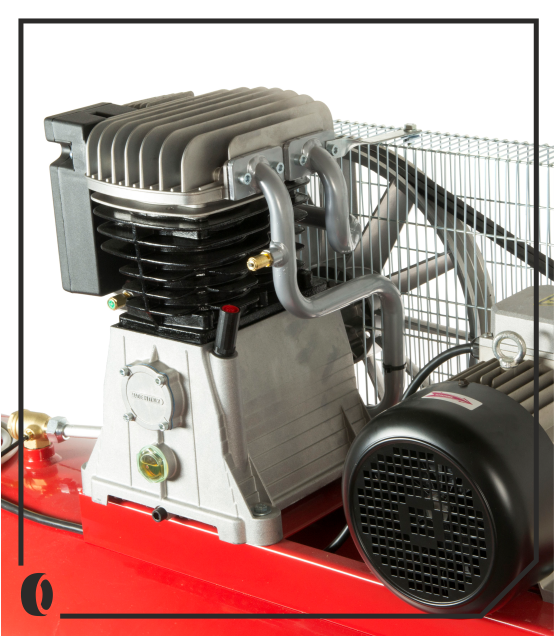
It is also very important to check that the bolts on the pump head are properly tightened. You will find the tightening torque values for each bolt in the device manual.

USED COMPRESSORS – ARE THEY WORTH IT?

As with any car service equipment, buying a second-hand unit comes with quite a lot of risk. The simple reason is that you never really know how the equipment was used. Yes, as a rule, piston compressors are fairly durable machines and should handle even intensive use without much trouble. The problem is that when you buy a used compressor, you never know how well it was looked after. As we mentioned earlier, oil changes are extremely important.

Someone might say, “I have had my compressor for years, never changed the oil, and it still works.”

Yes, that is true. It may well still be working. But it is a bit like engine oil changes in a car – maybe it will keep running, but at some point something may end up getting damaged.

Another issue is engine overheating. A piston compressor is under heavy load all the time. It runs continuously at high speed, so the risk of reaching very high temperatures is quite real. And dirt on the housing only makes cooling more difficult.

Well, this can be prevented. Regularly cleaning dirt off the external parts of the motor helps avoid this. Unfortunately, when you buy a “used one,” you have no idea whether the previous owner ever thought about that. As a result, you may end up buying a compressor that will not be able to deliver the performance you need.

Of course, second-hand units do have their advantages. Above all, they are much cheaper than new equipment. But think about it for a moment – is this really something you want to save money on? In the end, this is equipment you buy to make you money, not to break down and generate even more costs.

WHAT ABOUT A NEW PISTON COMPRESSOR?

When you choose a brand-new unit, at least you know one thing for sure – it is new. Unused. And in perfect condition. No one has operated it before, so it is ready for long, trouble-free work for years to come. On top of that, it comes with a warranty, so if any problems arise, you can count on the seller’s service support. And that is really the point – car service equipment is meant above all to work.

REDATS PISTON COMPRESSOR COMPARISON

If you are comparing several compressors, it is best to look at the key parameters side by side. That way, you can immediately see the differences.

ModelPower supply Motor power Air delivery Tank Max. pressure Compression stages 
REDATS T-100F 230V 50Hz 1.5 kW 159 l/min 100 l 10 bar1
REDATS T-150F 230V 50Hz 2.2 kW 225 l/min150 l10 bar1
REDATS T-200 400V3 kW 335 l/min 200 l 10 bar1
REDATS T-300 400V3 kW 335 l/min270 l10 bar1
REDATS T-500 400V5.5 kW640 l/min500 l10 bar2
  • The T-100F and T-150F are smaller 230V models – a good direction if you need a simpler compressor for basic jobs and do not want to go for a large tank.

  • The T-200 and T-300 have the same power and air delivery, but the T-300 gives you a larger air reserve thanks to its 270 l tank.

  • If you want the highest performance in this group, the largest tank, and two-stage compression, then the T-500 is the best choice.

SUMMARY

Still not sure which compressor to choose for your car service? First of all, pay attention to air delivery.

This is the most important parameter. It will help you determine whether a 100 L compressor is suitable for an impact wrench. If you know how much air your impact wrench needs, you can choose the right compressor to match it.The next thing is tank size. The larger the compressor tank, the less often you will have breaks in work. Why? Because the more air the compressor can store, the less often it needs to refill. This is especially worth keeping in mind if you want to do any paintwork in your car service, where a constant air supply is essential. In that case, compressors with a capacity of at least 300 litres will be the best choice

Post navigation

Previous Post:

How to store rims and tyres?

Next Post:

Trolley jacks and air jacks – what to consider

Recent Posts

  • Gearbox Jack – Read Before You Buy
  • Bottle Jacks – Price and Model Comparison
  • How do you organise a car service so it runs efficiently and safely?
  • 2T or 8T air jack – which lifting capacity should you choose for the vehicles you work on?
  • Buying a parts washer? These 5 things will surprise you in the very first days!

Recent Comments

    Archives

    • June 2026
    • May 2026
    • April 2026
    • March 2026
    • February 2026
    • December 2025
    • November 2025
    • October 2025
    • September 2025
    • August 2025
    • July 2025
    • June 2025
    • May 2025
    • April 2025
    • March 2025
    • February 2025
    • January 2025
    • December 2024
    • October 2024
    • August 2024
    • June 2024
    • April 2023
    • January 2023
    • November 2022
    • September 2022
    • August 2022
    • September 2021
    • February 2021
    • December 2020
    • October 2020
    • September 2020
    • August 2020
    • July 2020
    • June 2020
    • May 2020
    • April 2020
    • March 2020
    • February 2020
    • January 2020
    • December 2019
    • November 2019
    • October 2019
    • September 2019
    • August 2019
    • July 2019
    • June 2019
    • May 2019
    • April 2019

    Categories

    • Compressors and pneumatic tools
    • Tyre changers
    • Tyre service equipment
    • Wheel balancers
    • Workshop equipment
    • Workshop lifts

    Meta

    • Log in
    • Entries RSS
    • Comments RSS
    • WordPress.org
    © 2026 REDATS – How to choose tyre service and car repair tools REDATS.COM © REDATS Sp. z o.o. All rights reserved. Do not copy or use unless you have explicit consent from the Owner.