Skip to content
REDATS – How to choose tyre service and car repair tools
  • Go to website: REDATS.COM

REDATS – How to choose tyre service and car repair tools

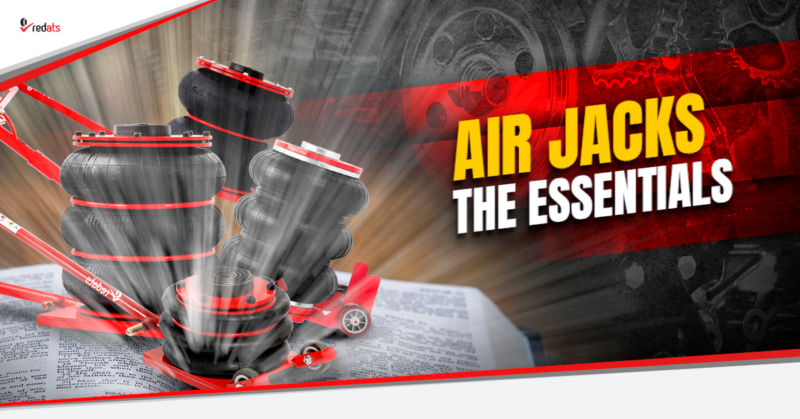
Air jacks – how they work, what they’re used for and how to choose the right one

16 January 2026 by Tomasz Szymański

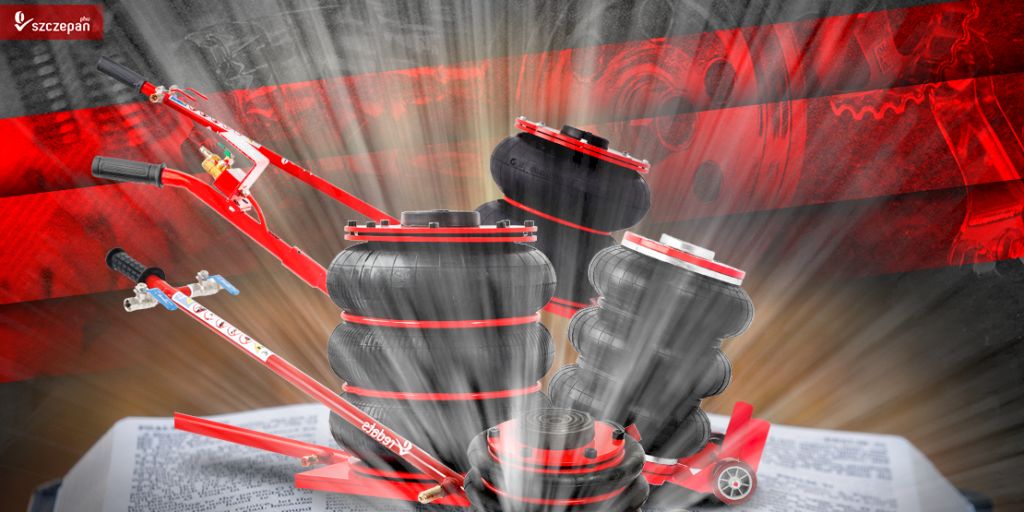
An air jack is a piece of equipment you know well from tyre services and car services. It’s designed to quickly lift a vehicle to a relatively low height.

The air jack is perfect for seasonal tyre changes. You connect the compressed air, open the valve, and the car goes up – no pumping a jack by hand.

In this article, we take a closer look at the topic and explain:

  • what the well-known air jack actually is,

  • which jobs it makes sense for – and when it’s better to choose a different solution,

  • what to look for when choosing one,

  • how to tell solid, reliable equipment from cheap designs that start causing problems quickly.

This is a true knowledge compendium. Let’s get started.
____________________________________________________________________________

How to choose an air jack?

When choosing an air jack, it’s worth focusing on a few key parameters that have a real impact on comfort and safety when working in a car service.

ParameterWhat to check
Lifting capacityAir jacks are usually available with capacities ranging from around 2 to 8 tons. It’s recommended to choose a model with some extra capacity, even if you mainly work on passenger cars.
Maximum lifting heightThis parameter helps you assess whether the air jack will be suitable for the typical vehicles handled in your car service.
Mobility and wheelsAn air jack often weighs over 30 kg – larger wheels make it much easier to move the equipment around the car service.
Height extension adaptersDepending on the model, these can provide an additional 10-20 cm of lifting height.

____________________________________________________________________________

Daily work, not occasional use

Air jacks are designed for regular, everyday use – lifting multiple vehicles throughout the day. In this respect, they differ from hydraulic trolley jacks, which are more often used for occasional tasks.

However, it’s important to remember that even a solid design requires proper use and basic checks to ensure the equipment works reliably and serves you well for a long time.

____________________________________________________________________________

How to store an air jack?

It may seem like a minor detail, but proper storage has a real impact on the lifespan of an air jack. Even a solid air jack will last for years only if it is stored correctly after use.

After finishing work – always without pressure

After use, the air jack should be:

  • stored in a horizontal position,
  • with all air fully released,
  • with the rubber bellows in their resting position.

Leaving an air jack under pressure shortens the lifespan of the rubber components and accelerates their wear.

Where should an air jack be stored?

The storage area doesn’t have to be special, but it must be dry. Long-term outdoor storage of an air jack is a bad idea – moisture and changing conditions will quickly take their toll.

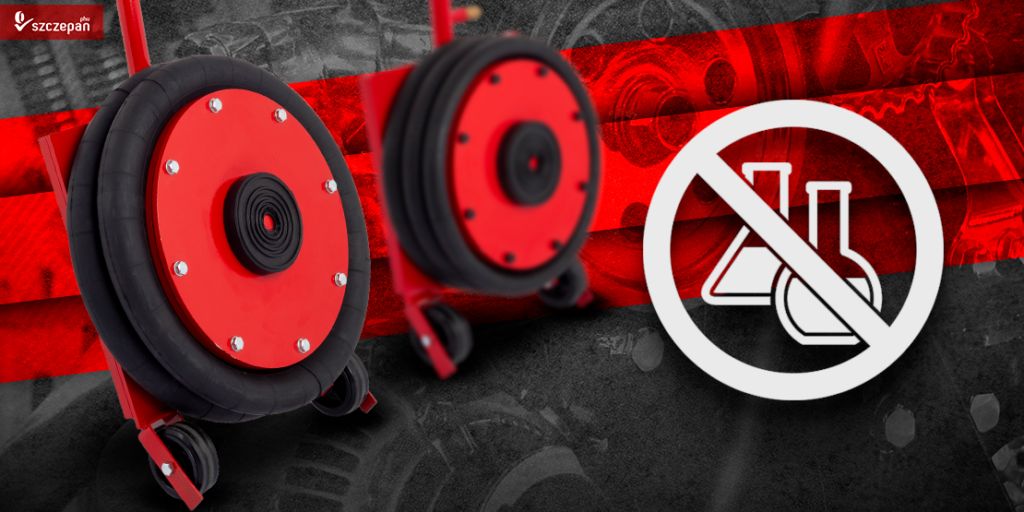
The surrounding environment is just as important. The air jack should not be stored near chemicals, especially:

  • oils,
  • solvents,
  • petrol.

Why? Because chemical substances are highly harmful to the rubber bellows and can lead to cracking or delamination.
____________________________________________________________________________

Safe use and cleaning of an air jack

An air jack used in a car service doesn’t require complicated maintenance, but there are a few basic rules worth keeping in mind. These mainly concern cleanliness and regular checks, which have a direct impact on work safety and the durability of the equipment.

Keep the air jack clean

After finishing work, it’s a good idea to:

  • check the air jack for mud, sand, and other contaminants,
  • regularly remove anything that could get near the bellows or moving parts.

Do not use aggressive chemicals for cleaning. Water and a soft cloth are sufficient. After washing, always wipe the air jack dry so that moisture doesn’t remain on rubber or metal components.

How to clean the rubber bellows?

If the bellows become dirty, it’s best to use products designed specifically for cleaning rubber components. These agents do not damage the rubber structure or accelerate ageing.

After cleaning:

  • wipe the bellows dry,
  • check for cracks, abrasions, or any unnatural deformations.

It’s a simple step, but it allows you to quickly spot the first signs of wear.

____________________________________________________________________________

Air jack – common problems and their causes

In practice, most problems with air jacks don’t result from the design itself, but from improper use or a lack of basic checks. Air jacks are relatively durable devices, but like any piece of equipment used in a car service, they have typical areas that are worth checking first.

Below, we’ve listed the most common issues along with their possible causes and the actions that should be taken.

SymptomPossible causes (from the article)What to check / what to do
Air leak• Loose bolts at the base• Loose bolts at the top cover• Leaking safety valve• Check and tighten the bolts• If the safety valve is faulty – replace it
Lack of stability during operation• Natural design of the air jack• Bellows do not return to their resting position• Long-term storage under pressure• Dirt or damage to rubber components• Check whether the bellows return to their resting position• Inspect storage conditions• Check the condition and cleanliness of rubber components
Air jack does not lower completely• Scratched piston• Replace the piston (this issue cannot be resolved by adjustment or cleaning)

____________________________________________________________________________

How to ensure safety when working with an air jack?

One thing is worth knowing: every air jack has a natural, slight sideways movement. This is not a defect or a malfunction – it’s simply how the design works. An air jack is not a rigid column lift and will always operate with a small amount of movement.

Sideways movement – normal, not a fault

Many users perceive this as instability, especially during their first contact with this type of equipment. However, if:

  • the air jack behaves the same as before,
  • the movement is minimal,
  • it does not increase over time,

there is no reason for concern.

When should you react?

If you notice that the air jack:

  • sways more and more to the sides,
  • behaves differently than it did before,
  • gives a clear sense of loss of stability,

then you should contact the service department. This isn’t about being overly cautious – it’s about catching a potential issue at an early stage.

Rare but possible faults

In extreme cases, instability may be caused by an issue with the internal piston. This happens very rarely, but it’s worth knowing that:

  • the piston may have loosened relative to the top cover,
  • the solution is to retighten it or replace it.

A well-designed air jack should minimise the risk of such situations, but as with any equipment used in a car service, regular checks and reacting to changes in how the device behaves are crucial.

___________________________________________________________________________

Clean air in the system – the basis of safe operation

As with any pneumatic device, air quality is crucial for air jacks. The air in the system:

  • must not contain water,
  • must not be contaminated.

Dirt and moisture accelerate component wear and can lead to the air jack malfunctioning.
___________________________________________________________________________

Setting up and operating an air jack – basic rules

When working with an air jack, it’s worth following a few simple rules:

  • Use the air jack only on a flat surface.
  • Lift the vehicle only on a solid surface, such as concrete or asphalt.
  • Do not force the air cushion – once the required height is reached, close the valve and shut off the air supply. Only then should you begin work.

Correct sequence of steps

  1. Connect the compressed air to the inlet valve located at the rear of the air jack.
  2. Leave the left switch in the closed position and do not exceed the operating pressure.
  3. Open the inlet valve – compressed air will fill the bellows and lift the vehicle.
  4. After finishing work, open the outlet valve to release the air from the bellows.

___________________________________________________________________________

Is it worth making an air jack yourself?

In theory – yes, it’s possible. You can easily find instructions and videos online showing how to build an air jack yourself.

The real question is whether such an air jack can provide an adequate level of safety. In practice, you’re lifting vehicles worth tens of thousands, and a professional air jack is designed specifically to minimise the risk of dangerous situations.

Not to mention the fact that you’re often working underneath the vehicle yourself…

____________________________________________________________________________

What should you keep in mind during everyday work with an air jack?

To wrap up, here are a few things that truly matter in practice:

  • Regular maintenance is essential – even a durable air jack requires proper care.
  • Cleaning is important, but avoid aggressive chemicals that can damage rubber components.
  • Do not overload the air jack – treat the lifting capacity as a limit, not a suggestion.
  • A properly working compressor is essential for correct air jack operation. It should be well matched to the equipment you use in your car service.

____________________________________________________________________________

FAQ (frequently asked questions)

1. What jobs is an air jack best suited for?

An air jack is used to quickly lift a vehicle to a relatively low height. It’s most commonly used for seasonal tyre changes and work on wheels and the underbody, where speed matters more than maximum lifting height.

2. What lifting capacity should you choose for an air jack?

Air jacks are available in a range of approximately 2 to 8 tons. In practice, it’s worth choosing a model with some capacity reserve, even if you mainly service passenger cars. This way, the air jack doesn’t operate constantly at its limit and handles intensive use better.

3. Can an air jack tilt sideways?

Yes. A slight sideways movement is normal and results from the design of an air jack.

Keep in mind that the vehicle doesn’t lift straight up vertically – it moves along an arc, which is why the air jack may sway slightly.

However, if the swaying increases or changes compared to previous operation, you should contact the service department.

4. Why does an air jack lose air tightness?

In most cases, air leaks are not caused by damaged bellows, but by loose bolts at the base or the top cover. Leaks can also occur at the safety valve or ball valves – in such cases, replacement is necessary.5. What should you do if an air jack doesn’t lower completely?

If the air jack doesn’t return to its resting position despite releasing the air, the cause may be a scratched piston. In this situation, the solution is to replace the piston, as this issue cannot be resolved through adjustment or cleaning.

Post navigation

Previous Post:

What tools are worth having in a Car Service? A practical guide

Next Post:

Parts washers – how to choose one?

Recent Posts

  • Gearbox Jack – Read Before You Buy
  • Bottle Jacks – Price and Model Comparison
  • How do you organise a car service so it runs efficiently and safely?
  • 2T or 8T air jack – which lifting capacity should you choose for the vehicles you work on?
  • Buying a parts washer? These 5 things will surprise you in the very first days!

Recent Comments

    Archives

    • June 2026
    • May 2026
    • April 2026
    • March 2026
    • February 2026
    • December 2025
    • November 2025
    • October 2025
    • September 2025
    • August 2025
    • July 2025
    • June 2025
    • May 2025
    • April 2025
    • March 2025
    • February 2025
    • January 2025
    • December 2024
    • October 2024
    • August 2024
    • June 2024
    • April 2023
    • January 2023
    • November 2022
    • September 2022
    • August 2022
    • September 2021
    • February 2021
    • December 2020
    • October 2020
    • September 2020
    • August 2020
    • July 2020
    • June 2020
    • May 2020
    • April 2020
    • March 2020
    • February 2020
    • January 2020
    • December 2019
    • November 2019
    • October 2019
    • September 2019
    • August 2019
    • July 2019
    • June 2019
    • May 2019
    • April 2019

    Categories

    • Compressors and pneumatic tools
    • Tyre changers
    • Tyre service equipment
    • Wheel balancers
    • Workshop equipment
    • Workshop lifts

    Meta

    • Log in
    • Entries RSS
    • Comments RSS
    • WordPress.org
    © 2026 REDATS – How to choose tyre service and car repair tools REDATS.COM © REDATS Sp. z o.o. All rights reserved. Do not copy or use unless you have explicit consent from the Owner.